
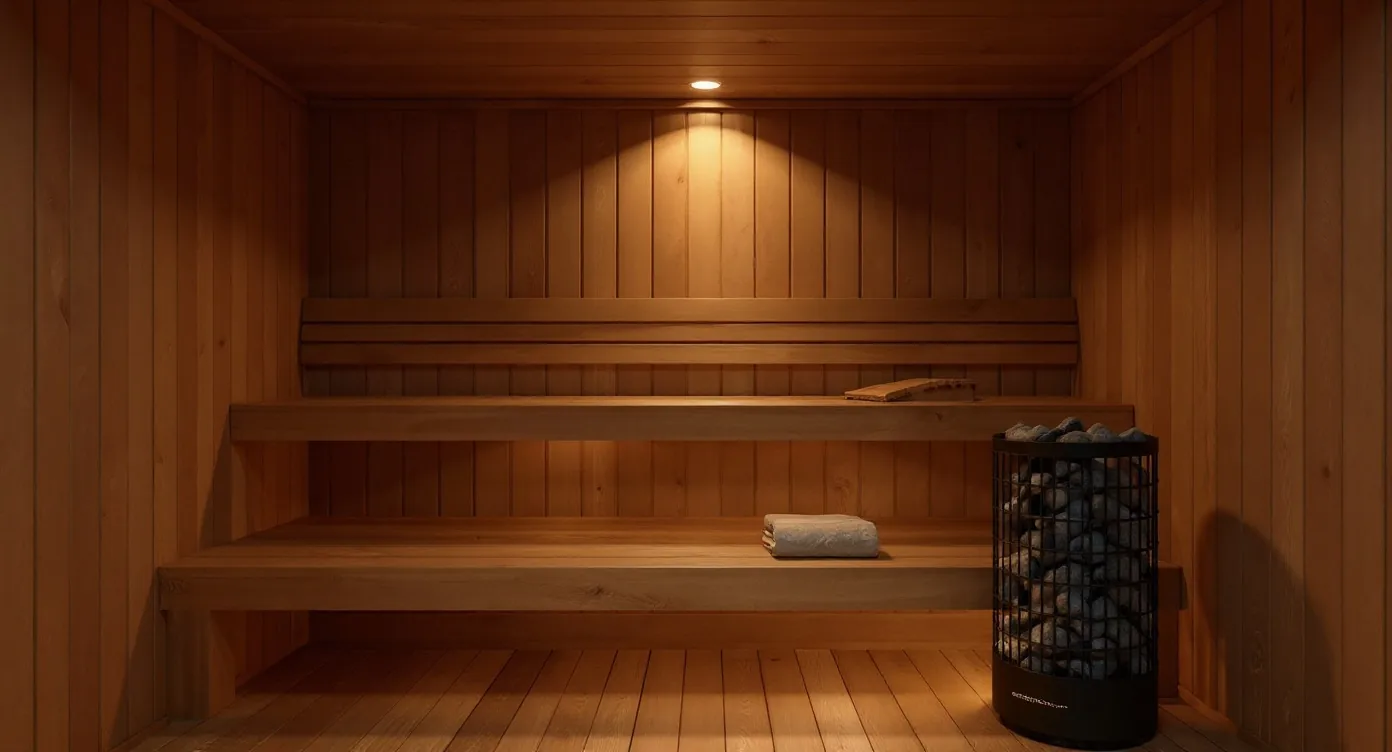
Finnish sauna is the classic configuration with a heater, heated stones and occasional löyly. Perceived heat comes from the whole system — heater, stone mass, ventilation, bench height and use.
The focus here is technical and sensory difference. The general sequence is covered in Sauna ritual, without a universal number of minutes or rounds.
Step 01What defines the Finnish sauna — physics and character
Three variables define the Finnish sauna: temperature, humidity and heat source.
Temperature. Finnish saunas generally use higher air temperature than BIO and IR modes. The exact range depends on the heater, volume, ventilation, materials and manufacturer instructions; it is not a universal health zone.
Humidity. Base humidity is lower and löyly creates a brief change in perceived heat. Permitted water amount and pouring method depend on the heater and stone volume.
Heat source: heater with stones. The stones store heat and enable löyly. Heater sizing, stone type and volume, and ventilation are confirmed for the specific sauna.
Finnish mode is characterised by dry air and brief humidity changes when water is poured on the stones. The intensity depends on the heater, stone volume, ventilation, bench position and way of use.
Step 02Technical anatomy — what a Finnish sauna must have
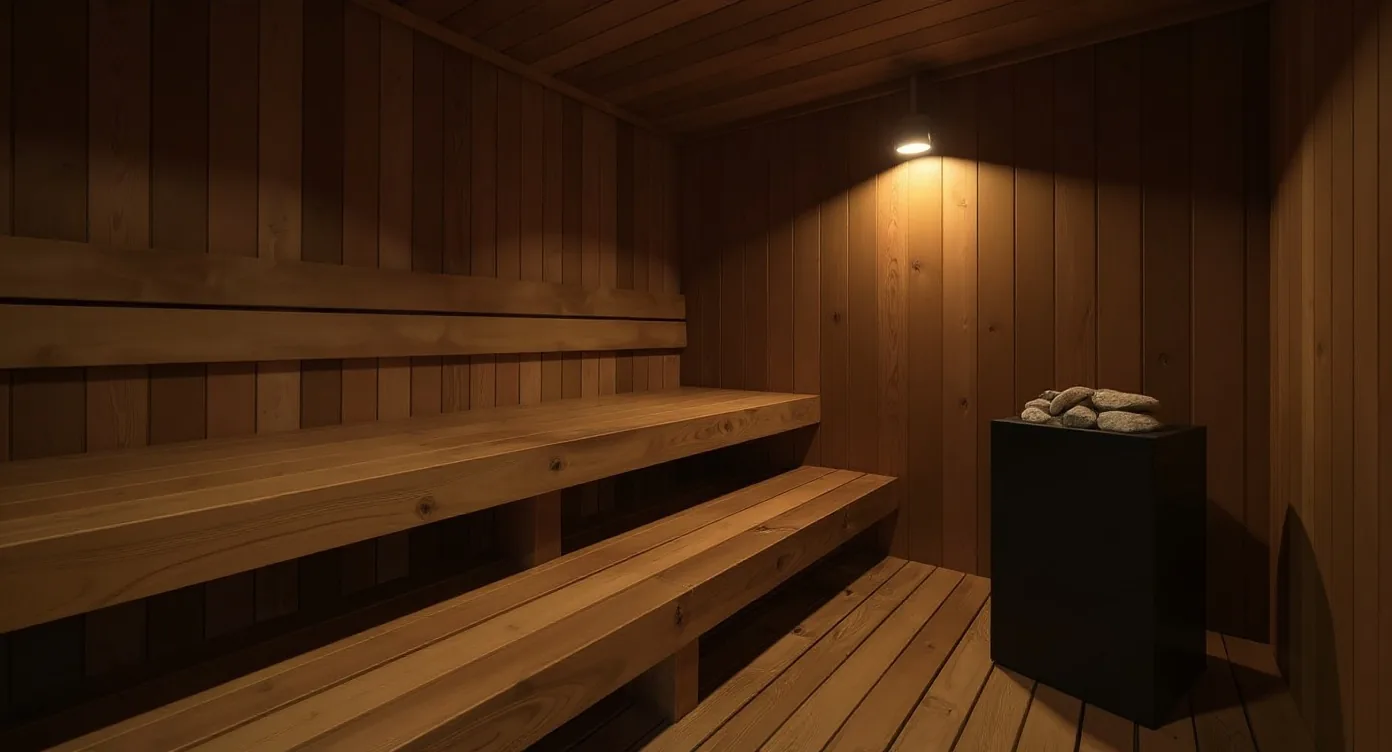
A functional Finnish sauna has five key elements. The absence of any one of them degrades the mode into something that resembles a Finnish sauna, but does not operate as one.
Heater and stones. Electric and wood-fired heaters differ in installation, warm-up, control and löyly character. Stone quantity and type, permitted water amount and service intervals follow the instructions for the selected heater.
Benches at several levels. Hot air rises and stratifies, so the upper bench is generally warmer. The actual difference depends on room height, ventilation, heater and bench layout; the design gives users a choice of intensity.
Ventilation. Air intake and extract are coordinated with the heater, room volume, benches and manufacturer instructions. Ventilation manages air exchange, heat distribution and drying after use; opening positions are not universal for every sauna.
Interior material. Bench and lining timber is selected for surface comfort, stability, resin behaviour and suitability for sauna conditions. Thermal treatment can improve stability, but no material removes the need for correct use and maintenance.
Room size. Required volume is not set by a universal square-metre range. It is designed around user count, bench layout, glazing, insulation, ventilation and the selected heater output.
Step 03Who the Finnish sauna suits — and who it does not
Finnish mode suits people who want the classic relationship between heater, stones and löyly, with a choice of intensity through bench position. It may not suit someone who repeatedly finds the perceived heat uncomfortable; BIO or IR can then be complete project alternatives.
Preference is not a medical indication. KUBIQ does not present Finnish sauna as a substitute for exercise, anxiety treatment, sports recovery or therapy. A person with a health condition, pregnancy or medication discusses suitability with a qualified medical professional.
Sauna is not an endurance test. One mode is not a status upgrade over another; the right one fits users, room and maintenance.
Step 04A practical framework for Finnish mode
Finnish mode does not require a universal schedule of minutes and cycles. The selected heater instructions, gradual familiarisation with heat and stopping at discomfort matter more.
- Use the sauna only after the installed heater and stones reach the operating condition specified by the manufacturer
- Choose the bench and amount of löyly according to experience and comfort; the upper bench is warmer because hot air stratifies
- Use water and permitted additives only according to the heater manufacturer’s instructions
- Exiting, gradual cooling and rest are part of the ritual, but their duration is not fixed
Dizziness, nausea, pain, weakness, confusion or an unusual response mean stop immediately. Discomfort is not a stage to endure to complete a protocol.
Step 05Löyly — deep technique
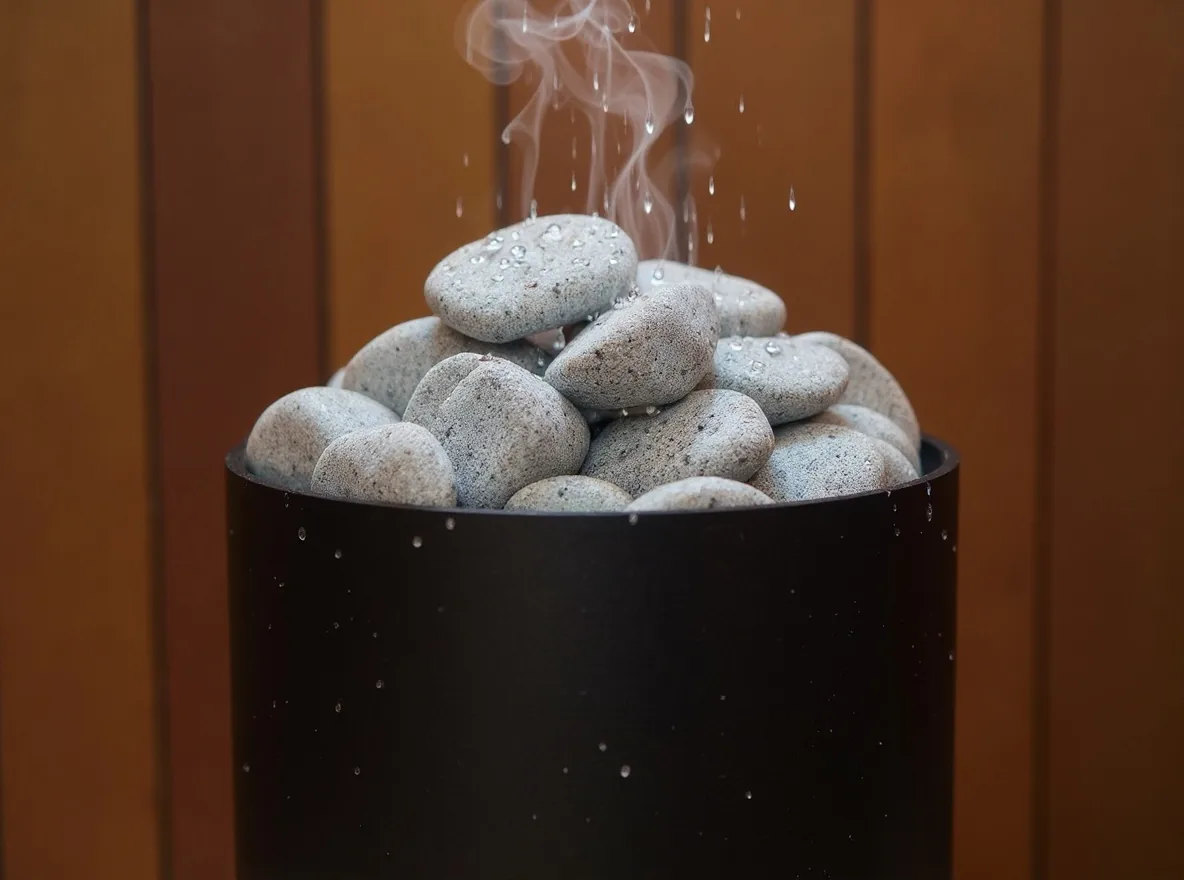
Löyly is created when a permitted amount of water reaches heated stones. Start small and observe the room and other users. Quantity, frequency, water and additives always follow the installed heater instructions.
Distribute water over the stone surface without targeting heating elements. If the steam becomes uncomfortable, do not intensify it to complete a “proper” ritual; wait or leave.
Birch, pine, spruce, mint, citrus and lavender belong to different fragrance traditions. Describe them as forest, fresh, herbal or calming in character — not as opening airways or treating a condition.
Use only products and vessels permitted by the manufacturer. Oils and concentrates do not go directly on stones. A birch whisk or vihta is a traditional sensory element; it is optional and KUBIQ assigns it no circulatory or medical effect.
Step 06Differences from other modes
| Feature | Finnish | IR | BIO |
|---|---|---|---|
| Heat source | Heater and hot stones | Infrared emitters | Compatible Combi heater |
| Humidity control | Intermittent löyly | No added steam | Controlled evaporation |
| Project focus | Heater, stones, ventilation and benches | Emitter position relative to the body | Combi equipment, water and maintenance |
A detailed comparison is covered in → Combining modes. The practical consequence for choosing the mode:
Finnish mode is commonly used as a structured ritual with exit, gradual cooling and rest. Duration and number of repetitions are not universal.
BIO and IR use different heat-transfer and humidity-control methods. The distinction is technical and sensory, not proof that one mode delivers the same health outcome in less or more time.
This affects the choice of mode for specific situations:
- Classic ritual with heater and stones → Finnish sauna
- Dry heat from emitters directed towards the body → IR sauna
- Preference for gentler heat and higher humidity → BIO sauna
Step 07Safety specific to the Finnish mode
Finnish mode can feel more intense than BIO or IR. Choose bench position progressively and leave immediately at dizziness, weakness, pain, nausea or an unusual response.
Stand without a sudden movement and keep a clear, non-slip exit. A towel supports hygiene and reduces direct skin contact with a warm bench. Sauna construction and materials must follow the relevant rules; KUBIQ does not state a universal temperature at which a burn occurs.
Leave phones, smartwatches and earphones outside because heat and humidity may exceed their operating limits. People with a health risk seek individual medical advice before use.
Step 08Next step
The Finnish sauna is the reference mode, but not the only one. The choice between Finnish, BIO and IR configuration depends on weekly practice, body tolerance and the space in which the sauna is placed.
→ How to choose the right sauna — guide through configurations