
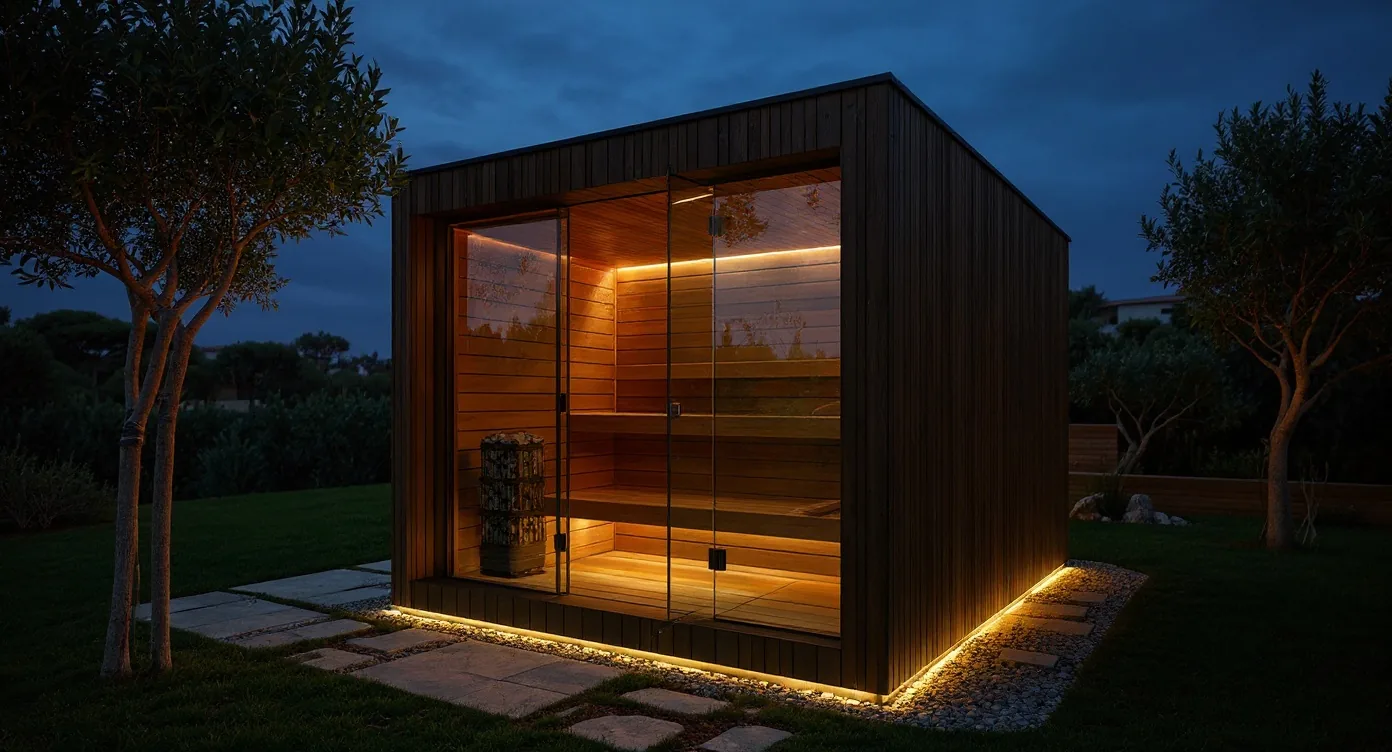
A sauna ritual is not a fixed schedule everyone must repeat. It is a way of using the room and its installed equipment: prepare the sauna, enter without rushing, observe your response, leave at discomfort, then choose cooling and rest that suit the user.
This guide explains a practical sequence for a private sauna. It does not define a medically optimal temperature, duration, number of rounds or weekly frequency.
Step 01Ritual as tradition and use
The Finnish word löyly describes the steam and change in perceived heat when water meets heated stones. Attention to the room, calm and agreement between users are central to the tradition — not setting a personal record.
One person may finish after one session; another may want to return to the heat after resting. Both are valid within the equipment instructions and personal limits.
Step 02A practical sequence — five decisions
1. Prepare the room and equipment
The sauna is ready when the heater, stones, ventilation and controls reach the conditions specified by the manufacturer. Warm-up depends on heater output, room volume, glazing, ventilation and starting temperature.
Remove metal objects and electronics and place a clean towel on the bench. Showering before use helps maintain the interior. Clothing rules depend on privacy, material and household preference. Alcohol is not appropriate before or during use.
Before first use, know the location of the main switch, heater controls, permitted water vessel, lighting and clear exit. Do not obstruct the door or leave towels and firewood beside a heat source.
When several people share the sauna, the most heat-sensitive user sets the acceptable löyly intensity. Water is not added without agreement, and the upper bench is not “better” — only warmer. These simple rules support a shared ritual without prescribing equal duration.
2. Use the heat
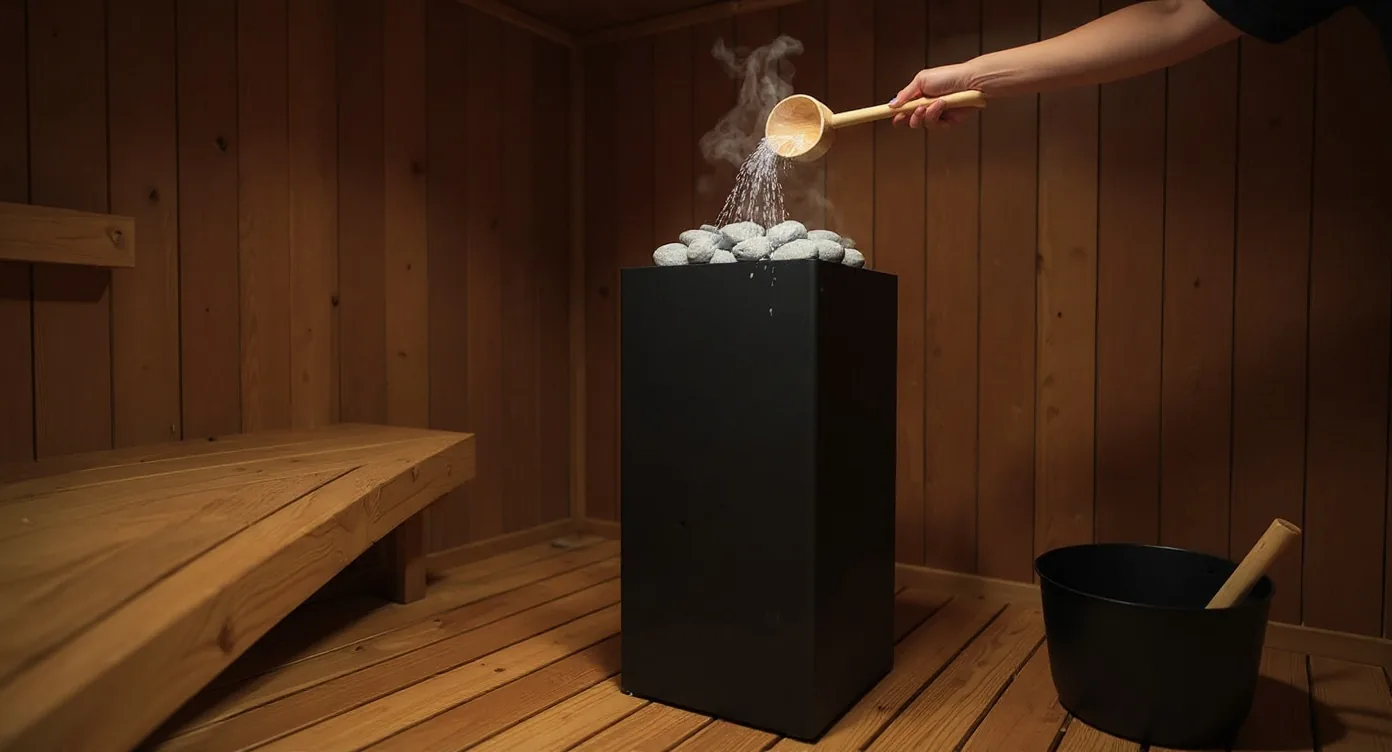
The upper bench is usually hotter, so position is chosen for the desired intensity. Water, pouring quantity and permitted fragrances are governed by the specific heater instructions. Do not place additives directly on stones unless expressly allowed.
Duration is not the goal. Discomfort, dizziness, weakness, pain or an unusual response means it is time to leave. Before standing, sit upright and rise without a sudden movement.
3. Exit and cool to tolerance
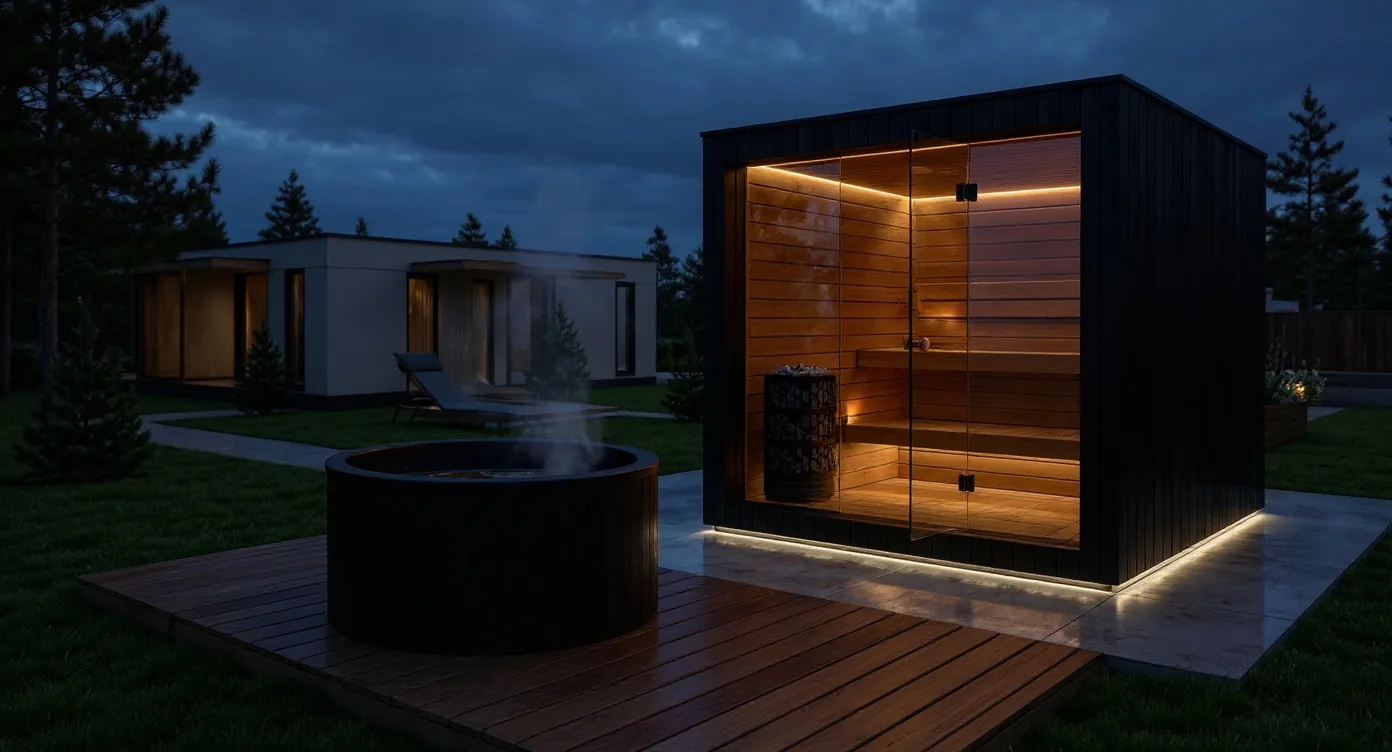
Cooling may mean comfortable fresh air, a shower or a cold plunge. Extreme cold is not required, and there is no single mandatory order. Intensity depends on experience, environment and health circumstances.
A cold plunge is a separate option, not proof that a ritual is “complete”. It requires safe access, a stable base and controlled water. Do not practise hyperventilation or breath-holding in water.
4. Rest
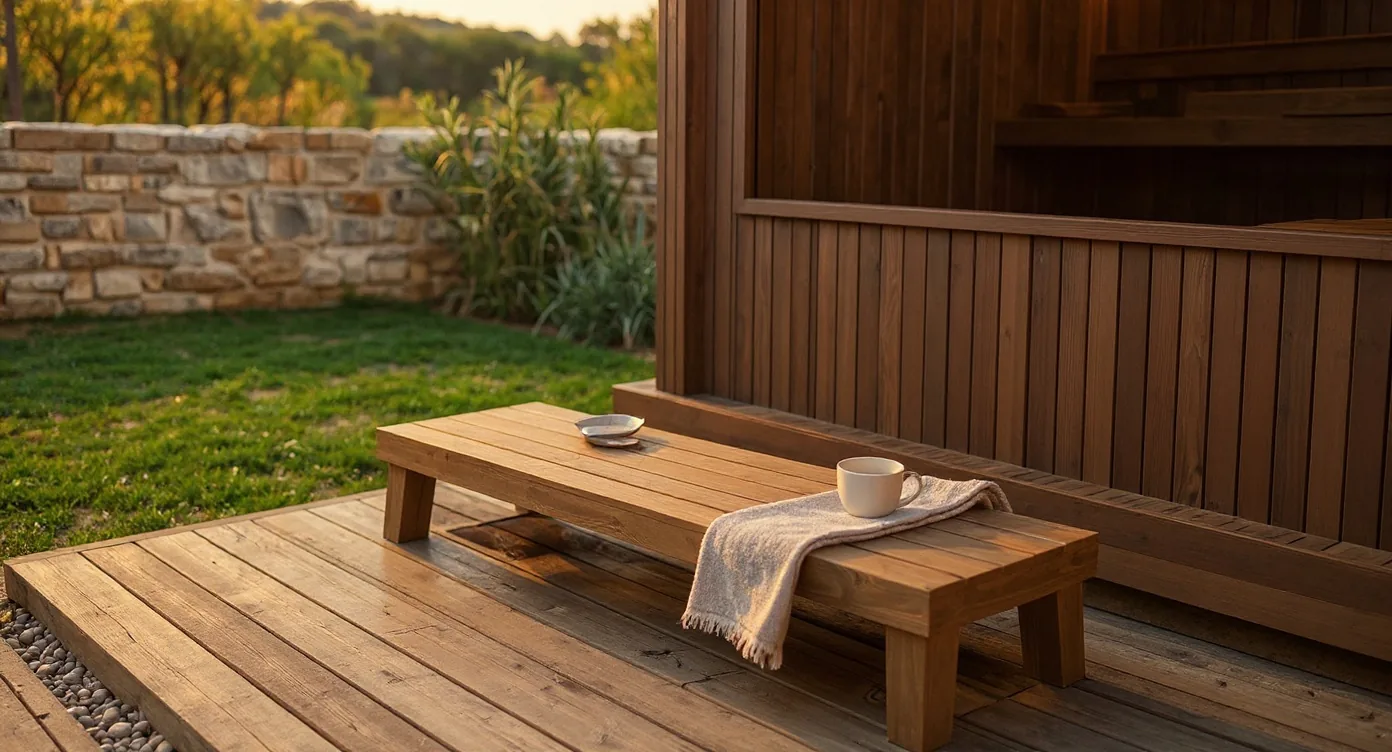
After leaving, dry off, sit or lie down and wait until breathing and general condition feel stable. Only then decide whether to finish or, if comfortable, return to the heat.
5. Finish or repeat
There is no required number of rounds. Repeating is not a mark of advanced use, and one comfortable session is not incomplete. Finish calmly and allow enough time before driving or another demanding activity.
Step 03The operating mode changes the experience
Finnish sauna uses a heater and stones with occasional löyly. BIO uses compatible Combi equipment for gentler heat and controlled humidity. Infrared transfers heat through emitters directed towards the body. Settings and permitted combinations follow the installed system.
One well-chosen mode may fully suit the user. Multiple modes make sense for people with different preferences, not because one mode produces an “incomplete” result.
Mode also affects the project: Finnish needs a correctly sized heater, stones and ventilation; BIO adds steam equipment, water and service; IR needs emitter positions aligned with the body. A useful ritual starts with sound specification, not copied settings.
After each use, ventilate and dry the cabin according to instructions, remove forgotten items and keep benches and floor open to air. This is as much part of the ritual as entering because it affects odour, surfaces and readiness for next use.
Step 04Common mistakes
- copying someone else’s temperature, duration or number of rounds;
- continuing through discomfort to complete a plan;
- using water or additives not permitted for the heater;
- entering under the influence of alcohol or when health calls for caution;
- standing and exiting abruptly without a clear route;
- assuming a cold plunge is mandatory;
- neglecting ventilation, drying and maintenance.
Step 05Personal rhythm, not a universal schedule
Frequency depends on experience, intensity, general condition and equipment instructions. Fatigue, headache, disrupted sleep or reduced function after use calls for a pause and, if repeated, medical advice.
Consistent, comfortable use matters more than a weekly plan. KUBIQ explains the installed controls at handover; a health protocol is not part of delivery.