
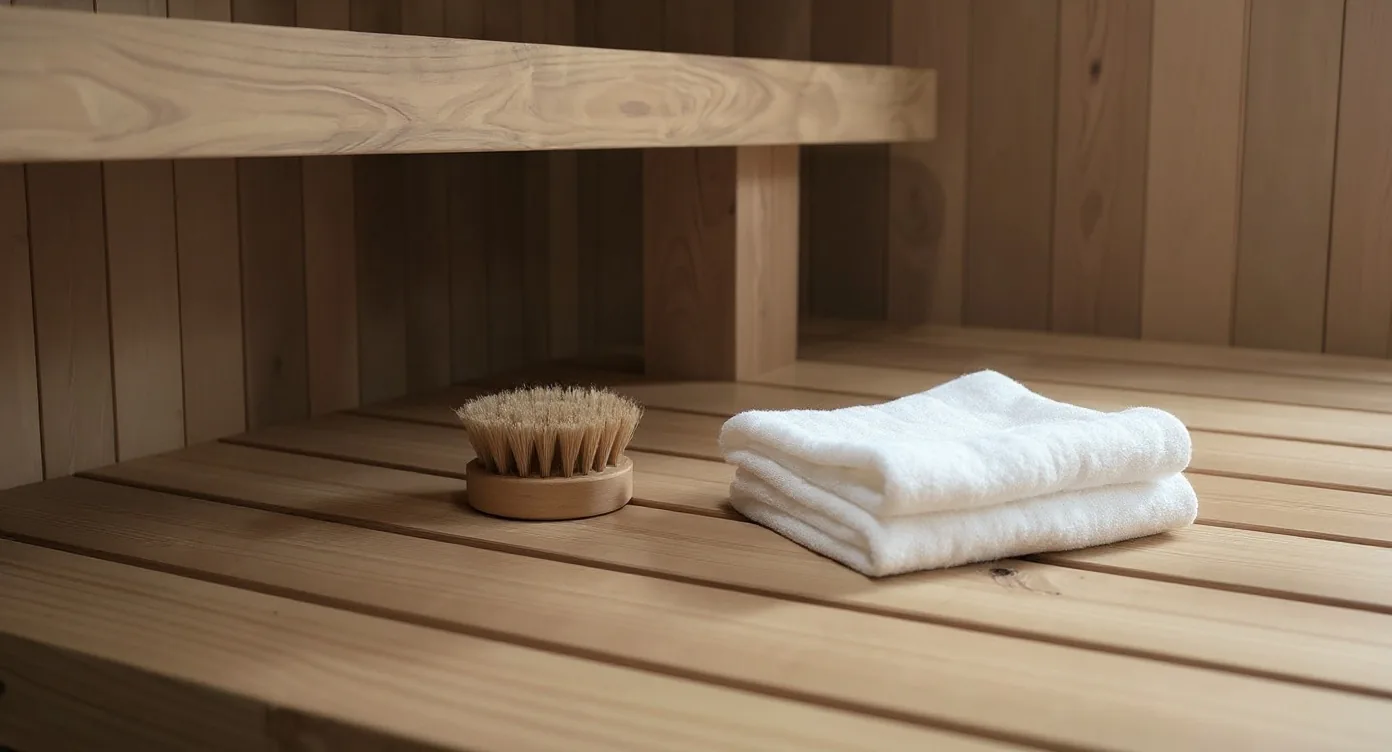
Timber in a sauna works through heat and humidity cycles. Wood species, finish, ventilation and maintenance therefore need to be treated as one system, not a universal formula.
Maintenance that follows that principle works simply. Maintenance that tries to "strengthen" the natural process with industrial products does not work, and in some cases causes damage.
This guide explains what should be done, what should not be done, and what the sauna as a space does by itself without intervention.
Step 01Principle: hygiene depends on materials and use
High temperature does not replace cleaning. Sweat, moisture and traces of use remain on benches, backrests, floors and other contact surfaces, so the hygiene routine must match the materials and intensity of use.
Use mild products and methods permitted by the manufacturer of the specific surface. Aggressive chemicals, chlorine and improvised mixtures can damage wood, finishes or equipment; commercial use requires a hygiene routine adapted to a higher number of users.
The goal is to remove sweat, stains and surface dirt without damaging the material. The correct method depends on the wood species, finish, heater and pattern of use.
KUBIQ should confirm a maintenance plan for the materials and equipment actually delivered with the project. General guidance in this article does not replace manufacturer instructions.
The intervals and procedures below are a checklist of topics, not a universal service calendar. If they differ from the handover documentation for the wood, finish, heater, BIO system or controls, the instructions for the equipment actually installed take precedence.
Step 02Prevention — where 80% of cleaning actually happens
Towel, shower before entry, drying after the session. Three simple procedures that reduce actual cleaning to a minimum.
Towel as a barrier
Direct skin contact transfers sweat, skin oil and cosmetic residue to a wooden bench. A towel covering the full contact area reduces the load on the benches; towel material and use rules should follow the sauna's operating guidance.
Shower before entry
Showering before sauna use can reduce transfer of cosmetics, oils and dirt to the benches. It is a useful hygiene habit, but timber appearance and durability also depend on material, use, drying and regular cleaning.
Drying after the session
Drying follows the installed ventilation design. After use, dry the cabin as defined at handover. Doors, vents and any drying mode do not follow a universal time because they depend on the build and installed equipment.
Drying after use helps limit retained moisture and condensation. The required ventilation and drying method depend on construction and installed equipment and are confirmed at handover.
Step 03Cleaning frequency
Different interventions have their natural rhythm:
After every session (5 minutes):
- The towel is removed from the sauna, not left inside
- Door open for drying
- Any sweat stains on benches are wiped with a damp clean cloth while the wood is still lukewarm
Weekly (15 minutes):
- Wipe benches, backrests and bench edges with a damp cloth (water only, no products)
- Check tightness of bench joints (screws)
- Wipe dust from ventilation openings
- Check heater stones — arrangement and cleanliness
Monthly (30 minutes):
- More detailed cleaning of benches with a soft brush + mild soap for sauna wood + water, in the direction of the grain
- Wipe ceiling and walls with a damp cloth
- Check floor grates, clean between slats
- Detailed check of door, hinges and seal
Annually (2–3 hours):
- Inspection of all wooden elements
- If needed: fine sanding of stains (P180–P240)
- Application of paraffin oil for saunas on benches and backrests (if the wood is absorbent — thermo alder, abachi)
- Service check of heater, elements, controller (recommended)
- Check of the ventilation system
Frequency is adjusted to intensity of use. A sauna used 4× per week needs different attention from one used 1× per week.
Step 04Monthly cleaning procedure
Step by step:
- The sauna must be completely cold and dry. Never clean immediately after a session or while the cabin is still warm.
- Lukewarm water (around 30 °C) in a bucket, small amount of mild soap intended for sauna wood.
- Soft brush — synthetic with soft fibres. Not wire, not hard plastic.
- Brush only in the direction of the wood grain, with light pressure. Brushing across the grain opens the wood structure and makes the surface more sensitive to future stains.
- Wipe with a clean damp cloth (water only) to remove soap residue.
- Door open for 1–2 hours for drying.
- If needed: short heating (drying mode, 40–50 °C, 30 min) to complete drying.
What to avoid in this procedure: excess water on benches, products intended for wood outside the sauna, abrasive brushes, cleaning across the grain.
Step 05Stubborn stains — fine sanding, not stronger chemistry
Stains that cannot be removed by mild washing do not need stronger chemistry — they need local fine sanding.
- Sanding paper or sponge P180–P240 (P180 for stronger stains, P240 for fine smoothing)
- Light pressure, only in the direction of the grain
- Only on the affected area, not on the whole bench
- After sanding: vacuum dust, wipe with a damp cloth, leave to dry
The advantage of quality sauna wood — especially thermo alder, which KUBIQ uses in sauna interiors — is that the surface layer can be renewed without aggressive products. The surface returns to a lighter tone, the wood smell is renewed, the touch becomes smoother.
What not to do: sand the entire bench surface or "rejuvenate" the wood by deep sanding. With years of use, wood develops structural saturation in the surface layer — aggressive sanding removes that layer, the bench becomes absorbent like new, and the stain cycle starts again.
Step 06Treating benches with paraffin oil
Sauna walls and ceiling remain untreated — the wood must breathe and react naturally to the microclimate of the space. Benches and backrests can be periodically treated with specialised paraffin oil for saunas.
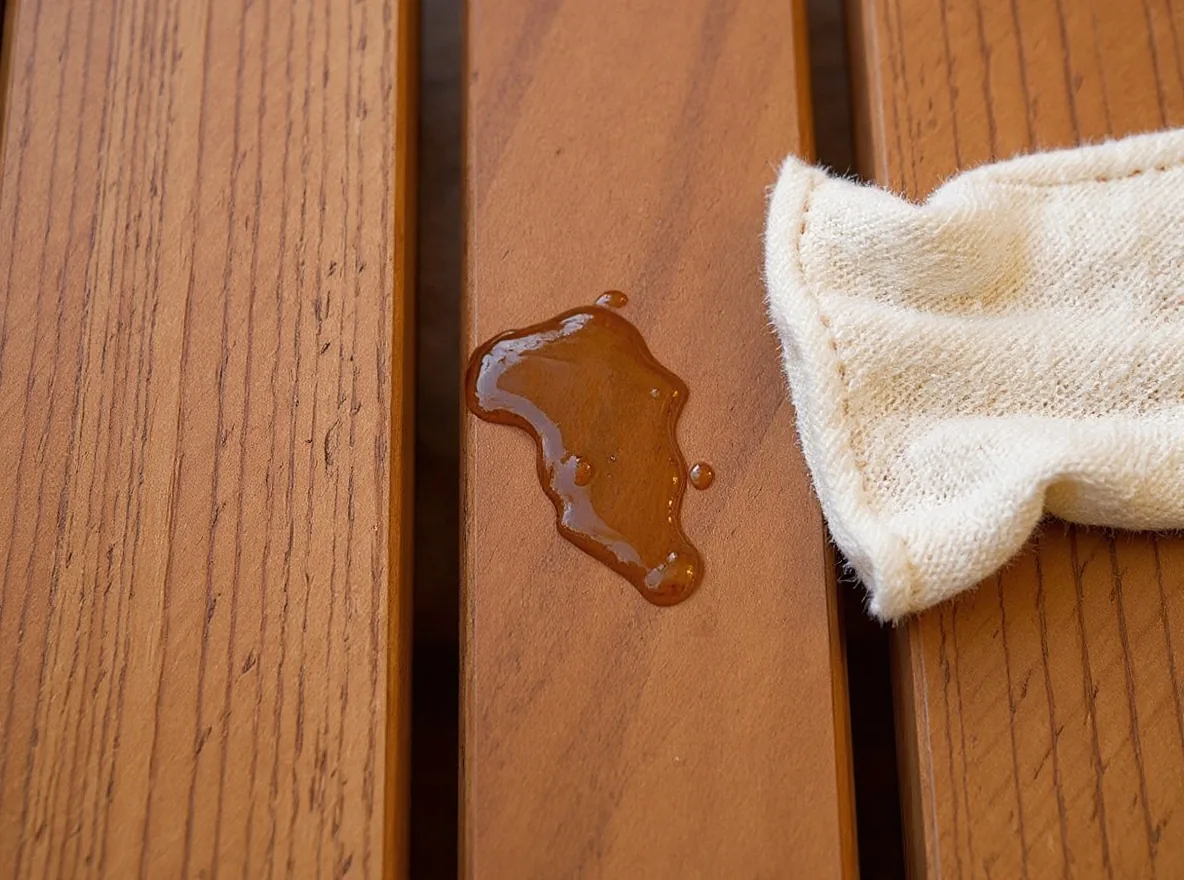
Paraffin oil for saunas is pharmaceutical-grade mineral oil: odourless, without additives, explicitly intended for high temperatures. It enters the surface layer of the wood and reduces absorption of moisture and sweat, which makes future maintenance easier and extends the time between more intensive cleanings.
Procedure:
- The wood must be clean and completely dry
- Oil is applied with a sponge or soft cloth in a thin even layer
- It absorbs for 30–60 minutes
- Wipe off all excess oil with a dry cloth — critical step. Unabsorbed oil on the surface sticks to skin during heating and can create an unpleasant touch
- Heat the sauna briefly (40–50 °C, 30 min, door open) to stabilise polymerisation
Frequency:
- Private use: treatment interval follows the timber, finish and supplier instructions
- Intensive or commercial use: inspect more often, without a universal calendar
Important to know: not all wood species are treated. Cedar and hard local species do not require oil. Thermo alder and abachi benefit from treatment. The specific recommendation depends on the model specification.
Step 07Differences by wood species
KUBIQ uses different wood species in different roles. Cabin exterior — Lunawood thermo pine (Triple 32mm class). Interior — most often brushed thermo alder, optionally abachi for certain configurations, cedar for bespoke projects.
Thermo alder (brushed) — KUBIQ standard for the interior
Thermally treated, dimensionally stable, resistant to colour changes. Brushed surface treatment gives a pleasant tactile experience that remains consistent for years.
- Weekly wiping with a damp cloth
- Monthly cleaning with mild soap
- Paraffin oil annually (benches, backrests)
Abachi
Soft African wood with low thermal conductivity, suitable for touch surfaces. It absorbs more sweat than some harder species, so cleaning follows usage and the instructions for the actual finish.
- Weekly wiping (more intensive than thermo alder)
- Monthly cleaning
- Paraffin oil 1–2× per year
Cedar (Western Red)
Naturally resistant to moisture and insects due to a high tannin content. Least maintenance of the three options. The characteristic cedar scent is part of the experience, not a defect — do not try to "clean" it away.
- Weekly wiping is enough
- Paraffin oil is not necessary
The exact wood type for a specific KUBIQ model is stated in the personalised documentation delivered with the sauna.
Step 08BIO mode — separate cleaning
If the installed BIO equipment includes a reservoir or fragrance function, maintain it separately according to manufacturer instructions. Not every BIO system is designed for essential oils.
- After BIO-mode use: maintain the reservoir and system according to the installed equipment manufacturer’s instructions
- Periodically: remove residues and limescale according to water quality and the system service plan
- Fragrances and concentrates: use and remove them only as permitted by the installed-equipment manufacturer
Scents that over time "enter" the wood are not a problem if they are natural and used in reasonable concentration. Eucalyptus, mint, pine, fir — the wood gradually absorbs the testimony of years of use. Many owners value that patina of practice as part of the character of their own sauna.
What to avoid in BIO mode: synthetic perfumed oils, "aroma essences" that are not explicitly for sauna use, scents whose description mentions alcohol carriers.
Step 09What never to do
A strict list of rules that do not bend:
- Pressure washer in the sauna — pressurised water entering cladding and panels destroys insulation
- Bleaches, chlorine products and disinfectants — do not use without confirmed compatibility with the surface and equipment
- Universal bathroom cleaners — they are not designed for high temperatures
- Varnishes, stains, coloured coatings — sauna wood remains "bare" intentionally
- Essential oils directly on benches — only in the heater reservoir, not on wood
- Leaving the sauna closed and humid after a session — recipe for condensation
- Sanding across the grain — destroys the surface structure
- Sanding the whole surface instead of local stains
- Drying towels inside the sauna — wet textile = permanent moisture in the cladding
- "Refresh" treatments with unverified products — without explicit sauna certification they do not go inside
Next step
Regular maintenance reduces the risk of premature damage but does not guarantee a universal number of years. The plan follows materials, use intensity, site and installed equipment.
View KUBIQ saunas and specifications → Models, wood species, heaters and configurations — all with maintenance recommendations for the specific cabin.
A question about a specific installation? → Send the installed-equipment details and the issue; KUBIQ will confirm whether it needs a KUBIQ inspection, manufacturer service or another qualified contractor.