
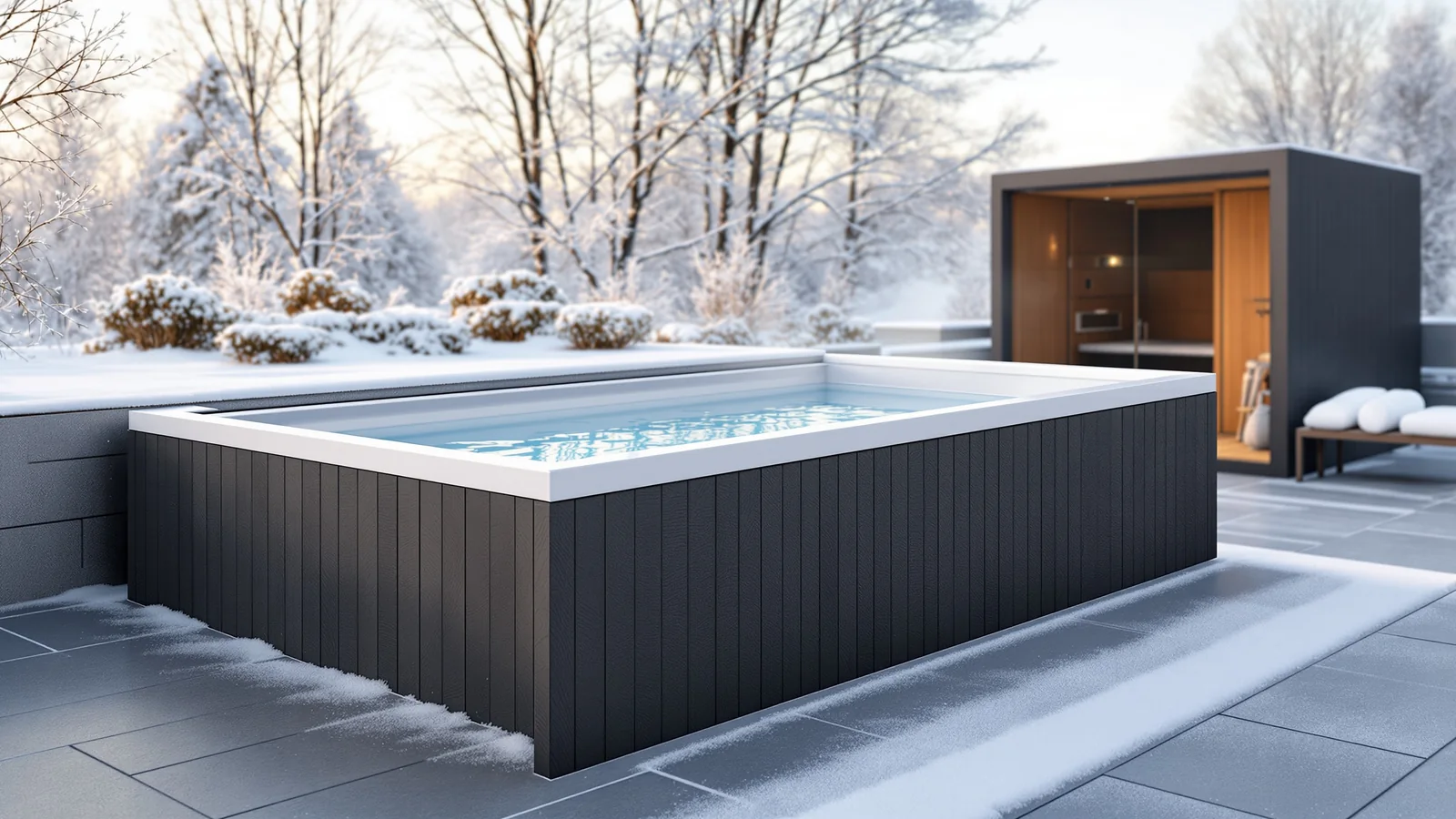
A cold plunge is a controlled-cold-water system, not the name of one health protocol. Its project value lies in repeatable technical conditions: temperature within equipment limits, circulation, filtration, safe access and planned maintenance.
An ice tub or cold shower can be a sensible occasional trial. A system becomes relevant when the user wants more predictable operation, less manual preparation and a permanent outdoor installation.
Step 01What a cold plunge actually is
A cold plunge combines a vessel, heating and cooling, circulation, filtration, cover, utilities and controls. Each must fit water volume, site, climate and expected use.
Controlled temperature does not mean one setting is ideal for everyone. KUBIQ defines the technical range and operation of installed equipment; it does not prescribe a medical dose of cold.
Step 02What separates a system from improvisation
Heating and cooling. An inverter heat pump maintains the setting within its declared operating conditions. Selection depends on volume, climate, equipment position and operating mode.
Circulation and filtration. Pump, skimmer and selected sanitation support water care but do not remove the need for checks, cleaning and replacement according to instructions.
Cover and construction. A cover reduces debris and heat exchange. Cladding and substructure are selected for outdoor exposure and service access.
Step 03When DIY is enough
For a few controlled trials, an ice tub can be a rational first step. It shows whether cold-water use suits the person before investing in a permanent system.
The DIY limit is operational, not about status: manual cooling, variable conditions, draining, hygiene and preparation time. If those demands are acceptable, a system may not be needed. If not, automation makes sense.
Step 04Year-round operation is a project decision
Year-round operation depends on equipment limits, freeze protection, cover, pipe position, wind, drainage and service. Saying a heat pump “heats and cools” is not enough.
KUBIQ checks local conditions and defines operation and standby around selected equipment. Extreme weather may require extra measures or temporary shutdown.
Step 05Water and maintenance
The plan covers water checks, filter and skimmer cleaning, cover condition, circulation inspection and water replacement according to equipment and intensity. There is no universal interval for every site.
Separate everyday user checks from periodic service. The user watches water clarity, flow and control messages; service inspects equipment, connections, protection and component condition according to the manual.
Incoming water quality affects scale and care. Before final specification, identify water source and hardness because they can change preparation, treatment and service intervals.
Service access must remain available without dismantling a terrace or adjacent element. That detail separates a designed system from a product simply placed in a garden.
Step 06Outdoor installation
Base: level, stable and sized for filled vessel, user and equipment. Power: suitable connection and protection. Drainage: controlled emptying without damage. Access: safe entry, exit and service.
Position follows privacy, circulation, utilities and views. Proximity to a sauna may be practical but is not necessary.
Step 07Standalone or part of a wider space
A cold plunge can be the first and only wellness element, designed with its own access, drainage, maintenance and visual relationship to garden or terrace.
If a sauna may be considered later, position and utility route can leave that option open. This is not a reason to sell a sauna today or call the plunge a “cold half” of a required package.
Step 08Safety and when a system makes no sense
Cold water can rapidly change breathing, coordination and general condition. Do not practise hyperventilation or breath-holding in water; keep the exit clear and do not use alone during initial experiences. Discomfort, pain, disorientation or loss of breath control means immediate exit.
This guide is not medical advice. Cardiovascular or other chronic conditions, pregnancy, a history of fainting or medication affecting circulation require individual assessment by a qualified medical professional.
A system makes no sense for a few trials, where utilities are not feasible or where regular maintenance is unacceptable. A simpler solution may then be better.